Los Angeles Philharmonic, Carlo Maria Giulini: Beethoven: Symphony No. 3 in E-Flat Major, Op. 55 "Eroica" (The Original Source Series) 2LP
Beethoven began composing his Third Symphony shortly after his increasing deafness and suicidal thoughts became public knowledge. The ‘heroic’ style of this symphony can be interpreted as a musical expression of his triumph over personal suffering. But the symphony also has enormous musical significance: with the ‘Eroica’, Beethoven expanded the symphonic form and thus changed the expectations of a four-part symphony for the next two centuries. Giulini’s recording with Los Angeles Philharmonic Orchestra is highly regarded as reference recording.
LP 1
Side A
1. I. Allegro con brio
Side B
1. II. Marcia funebre. Adagio assai
LP 2
Side C
1. III. Scherzo. Allegro vivace
2. IV. Finale. Allegro molto
Product Information
Product Information
Shipping & Returns
Shipping & Returns
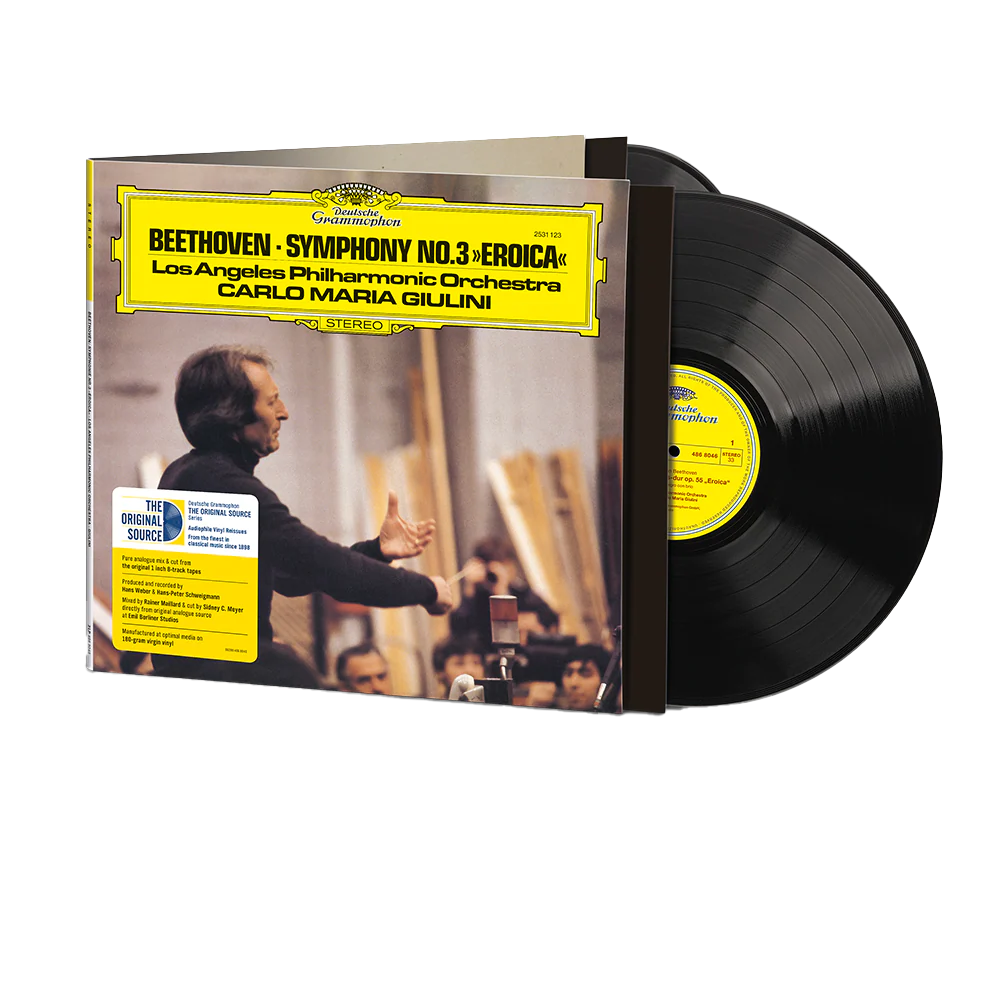
Los Angeles Philharmonic, Carlo Maria Giulini: Beethoven: Symphony No. 3 in E-Flat Major, Op. 55 "Eroica" (The Original Source Series) 2LP
Los Angeles Philharmonic, Carlo Maria Giulini: Beethoven: Symphony No. 3 in E-Flat Major, Op. 55 "Eroica" (The Original Source Series) 2LP
Beethoven began composing his Third Symphony shortly after his increasing deafness and suicidal thoughts became public knowledge. The ‘heroic’ style of this symphony can be interpreted as a musical expression of his triumph over personal suffering. But the symphony also has enormous musical significance: with the ‘Eroica’, Beethoven expanded the symphonic form and thus changed the expectations of a four-part symphony for the next two centuries. Giulini’s recording with Los Angeles Philharmonic Orchestra is highly regarded as reference recording.
LP 1
Side A
1. I. Allegro con brio
Side B
1. II. Marcia funebre. Adagio assai
LP 2
Side C
1. III. Scherzo. Allegro vivace
2. IV. Finale. Allegro molto
Product Information
Product Information
Shipping & Returns
Shipping & Returns
Description
Beethoven began composing his Third Symphony shortly after his increasing deafness and suicidal thoughts became public knowledge. The ‘heroic’ style of this symphony can be interpreted as a musical expression of his triumph over personal suffering. But the symphony also has enormous musical significance: with the ‘Eroica’, Beethoven expanded the symphonic form and thus changed the expectations of a four-part symphony for the next two centuries. Giulini’s recording with Los Angeles Philharmonic Orchestra is highly regarded as reference recording.
LP 1
Side A
1. I. Allegro con brio
Side B
1. II. Marcia funebre. Adagio assai
LP 2
Side C
1. III. Scherzo. Allegro vivace
2. IV. Finale. Allegro molto